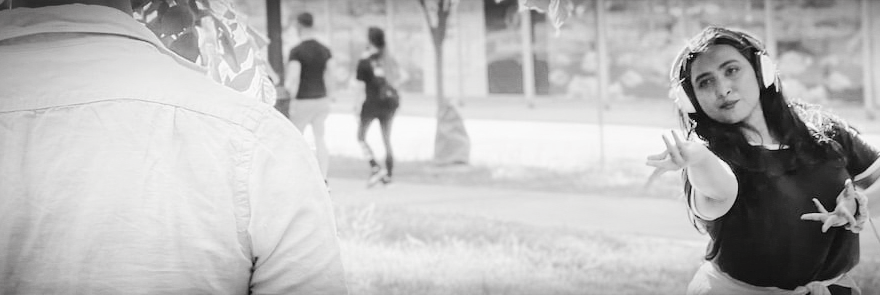
Leading into June, I worked on a dance project called Écoute Pour Voir. Directed by Emmanuel Jouthe, Écoute Pour Voir is a piece that brings together diverse solos in a shared public space. The solos are performed just one spectator at a time, with dancer and viewer sharing a piece of music using headphones. The idea is to create a unique and intimate moment of art.
Choreographing for this project was unfamiliar terrain: when I perform, I don’t see any one person, but now suddenly the crux of the performance would be the idea of connection. The headphones introduced restrictions on movement, but I was also encouraged to think creatively about space, moving beyond proscenium staging. Quite befuddled by these new parameters, I started choreographing slowly in my apartment, wondering what experiences I could share with viewers, what common ground we might have. What emerged from this initial phase of creation was a piece somewhat influenced by the pandemic lockdowns, an expression of isolation, fatigue, weight – some of the things I was dealing with.
But how this piece grew!
On our first day of performances, Emmanuel said that we are always in process, even when we arrive at something we call a “performance.” I performed my solo about 25 times in total, and it always felt like practice, like I was moving towards something new, different or refined. At first I felt awkward and displaced, but with each iteration of the dance, I had a chance to take in my surroundings – the people passing by, peering curiously; the yellow daylight hot on my skin, grass cool under my toes; the trees with drooping leaves and flowers; bumblebees in the shade; and, of course, my viewer. As I danced over and over again, my piece became laden with these surroundings and the emotions they were evoking; I found myself moving freer, responding to and moving with my environment. Though my dance still carried the original sense of isolation and weight from my apartment, each performance brought with it a sense of peace and satisfaction too. Overtime, I felt comfortable, grounded and present. It was really a very nice experience.
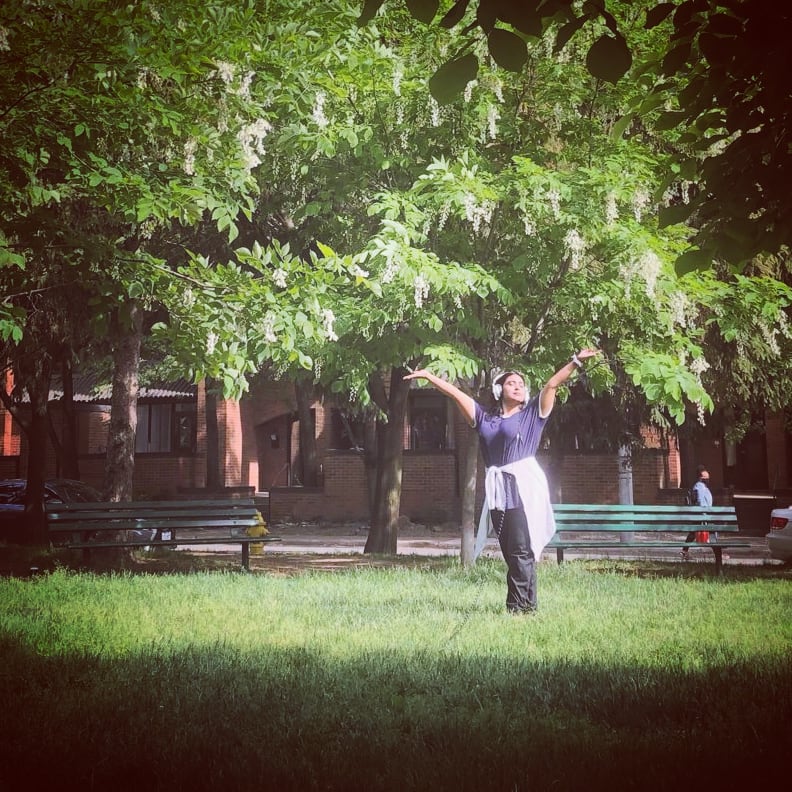
On the last day of performances, I sat in the shade of a pine tree, lazily watching the last few dancers from the sidelines, an outsider once more. I thought a bit about the sense of integration I had experienced, and then at the end, the disintegration, disengaging, disconnecting and going home. I think I have begun to learn something interesting about dance and space – that a dance can be OF and WITH a place (including a part of everything existing in that space), rather than just IN a place. I’m looking forward to exploring this further.
Photo Credits: Isorine Marc and Jasmin Linton, of Jamii Esplanade

 Gaman Thaale